
RA flare or something else: when to call today
A rheumatoid arthritis flare is a stretch when joints are clearly worse than your usual: more pain, more stiffness, more swelling, less use. An infection can look neighbouring — fever, chills, one joint suddenly red-hot, feeling ill in a way that is not “my RA week.” People search the difference because they do not want to bother the clinic, and because they do not want to wait at home with something that is not a flare. This page is how to sort the morning, not how to diagnose yourself. If you are on immune-suppressing treatment and you have fever, a single very hot joint, shortness of breath, or you cannot keep fluids down, you are not in a flare-diary problem. You are in a same-day problem.
Your usual flare has a shape you already know: which joints, how fast, what helps. Something that breaks that shape — one joint only, fever, skin red and hot beyond the joint, feeling poisoned — deserves a call even if you are embarrassed to be wrong. Being wrong on the side of a phone call is cheaper than being wrong on the side of an untreated infection while the immune system is already busy.
Questions that sort the day without playing doctor
Is this my usual joints, or one new angry joint? Is there fever or shaking chills? Can I use the joint at all? Am I on a medicine that lowers immune response? Did I have a cut, a cough, burning urine, or dental work? None of these questions replaces a clinician. They decide whether you send a message into the routine queue or you phone today. Rest, ice, and the flare plan you already agreed with the team are for the pattern you recognise. They are not for a joint that looks infected or a temperature you can feel in your teeth.
- Usual pattern, no fever, plan already agreed: follow that plan and tell the team if it lasts beyond what they said.
- Fever, chills, or one extremely hot joint: same-day advice, especially on immune-suppressing treatment.
- Chest pain, trouble breathing, a blotchy unwell feeling: emergency care, not a forum.
- Do not start leftover antibiotics “in case.” That is a different risk.
- Do not stop a regular RA medicine because of a bad morning unless the team has already told you when to hold it.
| Picture | Often handled as | Do not treat as |
|---|---|---|
| Known joints, no fever, usual pace | Your written flare plan | A reason to start random tablets |
| Fever or one red-hot joint | Same-day clinical advice | Another day of waiting it out |
| Breathing trouble, severe unwell | Emergency care | A message to send tomorrow |
The risk of being polite with a temperature
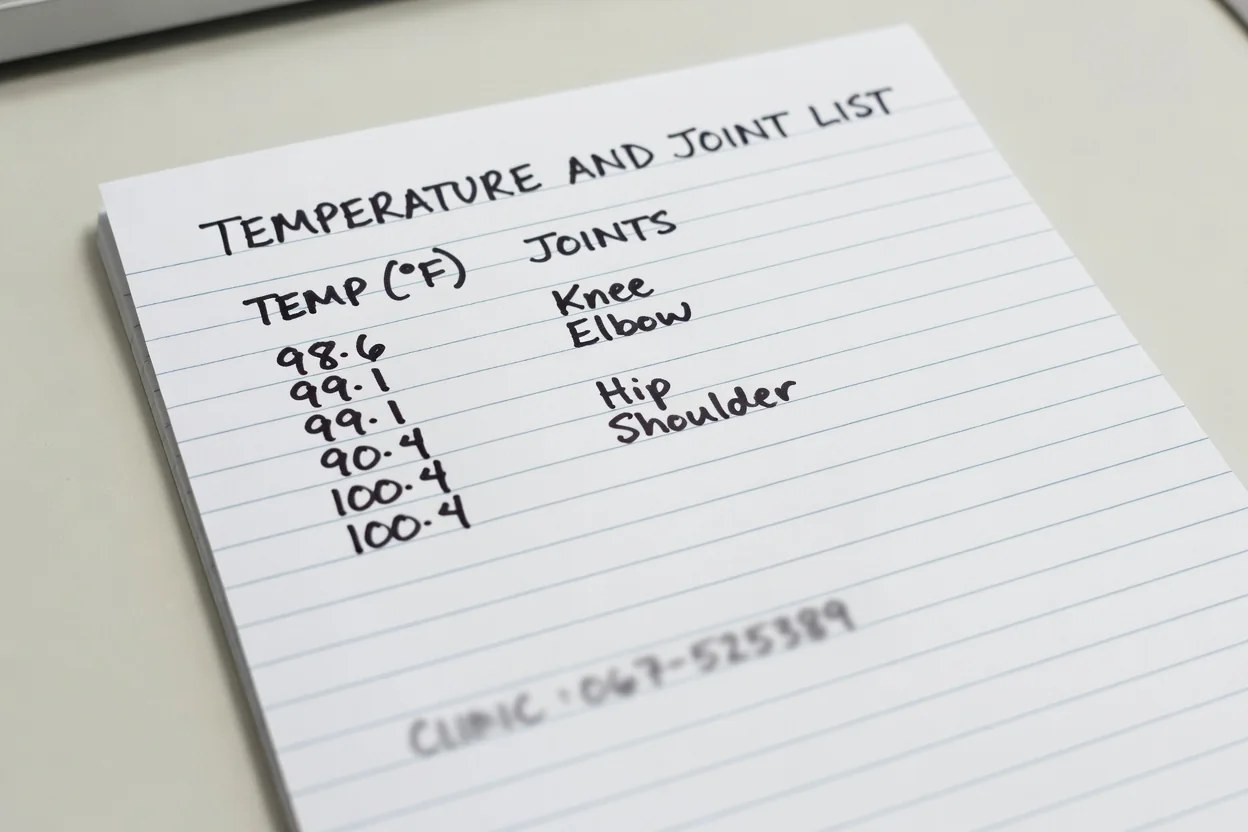
People on RA treatment are often too practised at enduring. Endurance is useful for a known flare. It is a liability for infection. The clinic would rather hear “I might be wasting your time” than hear you three days later. If you do not have a written flare plan, that is the next appointment’s job — not a page like this one inventing doses. Write what happened, the time, the temperature if you took it, and which joints. Then use the phone number you were given for sick days. If you were not given one, use the service that covers your area today.
What this page will not do for you
It will not name a tablet and it will not tell you to wait. A flare you recognise can follow the plan you already have. Anything that looks like infection, fever, or a joint you cannot use is a same-day conversation with a clinician. Politeness is not a treatment. The team would rather sort a false alarm than miss the day that was not a flare at all.