
Stadiums Built for Women's Football: A New Era

On 16 March 2024, Kansas City Current kicked off at CPKC Stadium, an 11,500-seat arena on the Berkley Riverfront built for one purpose: to be the permanent home of a women's football team. It was the first venue of its kind anywhere in the world, and it changed the conversation about what women's clubs are allowed to own.
For a century, women's teams have been tenants. They borrow men’s grounds for big occasions and train at borrowed facilities the rest of the year. Kansas City's bet is that the economics of the sport change fundamentally when the women are the landlords.
Why ownership changes everything
A tenant club keeps only a slice of matchday income and controls almost nothing around it. Concessions, hospitality, naming rights, non-matchday events: in a borrowed ground, all of that value flows to someone else. An owner captures it, and more importantly, controls the calendar, so the women's team never plays second fixture to anyone.
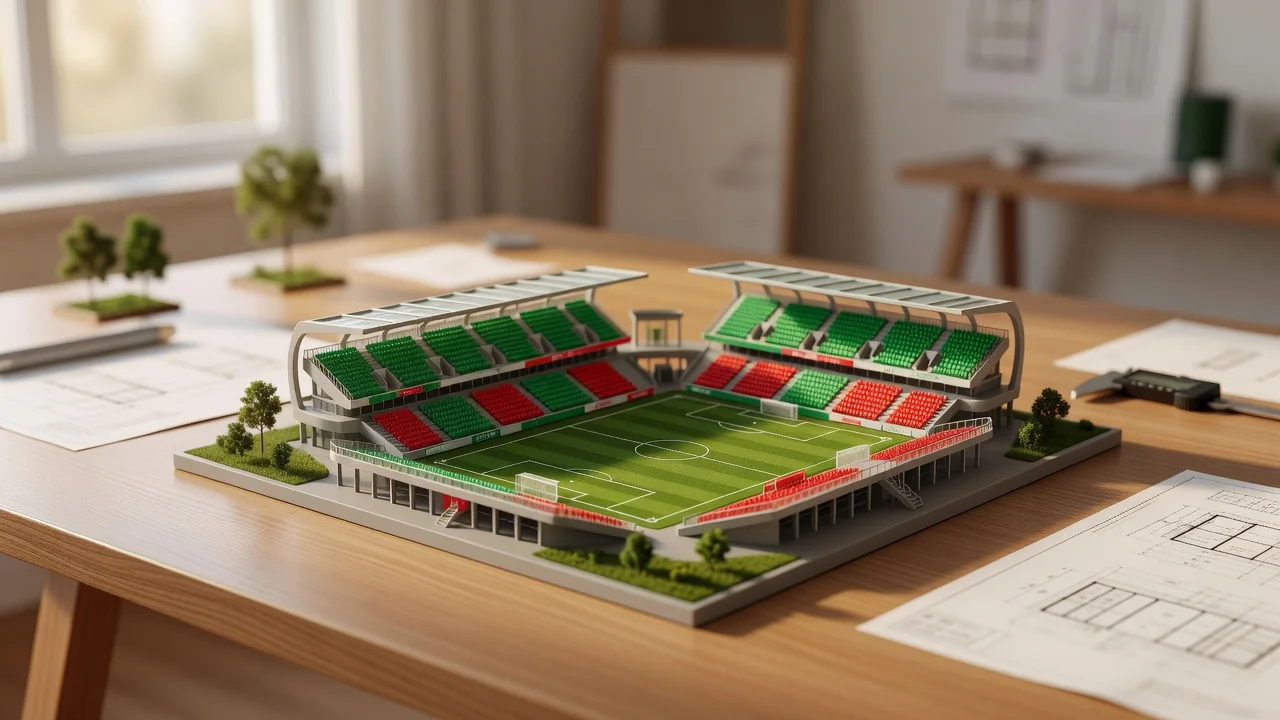
CPKC Stadium was designed to that logic. Every seat was built for sightlines to a football pitch, the premium areas were sized for the league's actual hospitality demand, and the naming-rights deal with CPKC bank gave the club a revenue line it owns outright. The Current sold out season tickets before the first match.
The economics in practice
| Revenue stream | Tenant club | Owner club |
|---|---|---|
| Ticketing | Shared or capped | Fully controlled |
| Concessions | Landlord's income | Club's income |
| Naming rights | None | Multi-year deals |
| Non-matchday events | Restricted access | Concerts, conferences, community use |
| Scheduling | Second priority | First priority, always |
Who is building next
Kansas City will not be alone for long. Across the NWSL, new ownership groups have made stadium control a central plank of their projects, with Denver's expansion club planning a purpose-built ground from day one. In Europe the logic is arriving differently: Arsenal's women's side now treats the 60,000-seat Emirates as a primary home, and Barcelona staged their biggest matches at Camp Nou until renovation intervened.
- Right-sizing: 10,000-15,000 seats fits real demand without empty sections.
- Location: city-centre or transit-linked sites beat distant complexes.
- Mixed use: training facilities and community pitches built into the same site.
- Design for the product: sightlines, acoustics and hospitality tuned to football.

A matchday at CPKC Stadium
The proof sits on the Missouri riverfront every home weekend. The Current sold out every match of the stadium's first season, and the building's design does the selling: steep stands close to the pitch, a supporters' section that generates noise above its size, and concourses built for families rather than corporate volume.
The surrounding district matters too. The club's training facility next door, the first built specifically for a women's team, turns the site into a campus rather than a venue. Visitors from other clubs tour the stadium like a trade show exhibit, which it effectively is. Every expansion owner in American sport has now walked those concourses with a notebook.
The deeper significance
A purpose-built stadium is a statement about permanence. Tenancy tells fans the team is a guest in the sport's real estate; ownership says the club expects to fill its own home for decades. Sponsors read that signal, players read it when choosing clubs, and young fans read it when deciding whether this team is theirs.
The Current's sellouts proved the demand exists when the product is staged with ambition. The clubs that follow will test whether 2024 was the start of a building era or a one-off. Every piece of available evidence, from expansion fees to broadcast money, points the same way: the first stadium built for women will not hold its title alone for long.
The lesson travels well beyond Kansas City. Any club that controls its home controls its economics, and the women’s game has finally reached the revenues where building makes sense. The tenant era is ending. The landlord era has its first address on the Berkley Riverfront.
The financing models are evolving just as fast. Public-private partnerships, naming-rights pre-sales and mixed-use developments are making 10,000-15,000 seat projects viable where they never were before. Kansas City de-risked the concept for everyone who follows. The second purpose-built ground will be cheaper to finance than the first, and that is how eras actually change.
Every young fan who walks into a ground built for her team gets the message without a word being spoken: this was made for you. The sport spent a century renting. It has finally started buying.
The first one was the hardest to justify. The tenth will be obvious. That is how infrastructure eras begin.
Keep reading

The 10 Biggest Crowds in Women's Football History
Camp Nou, Wembley, the Rose Bowl and a 1971 World Cup final in Mexico City that official history forgot. The ten biggest gates ever recorded.
2026-08-23
Equal Pay in Football: The Fight So Far
From the USWNT's lawsuit to Norway's landmark deal and FIFA's rising prize money. A timeline of the battles that changed what players earn.
2026-08-15
NWSL's Expansion Boom: New Clubs, New Money
Bay FC, Boston, Denver and a valuation jump from millions to hundreds of millions. How the NWSL became one of sport's hottest growth stories.
2026-08-08