
Four Stars: How the USWNT Won Four World Cups
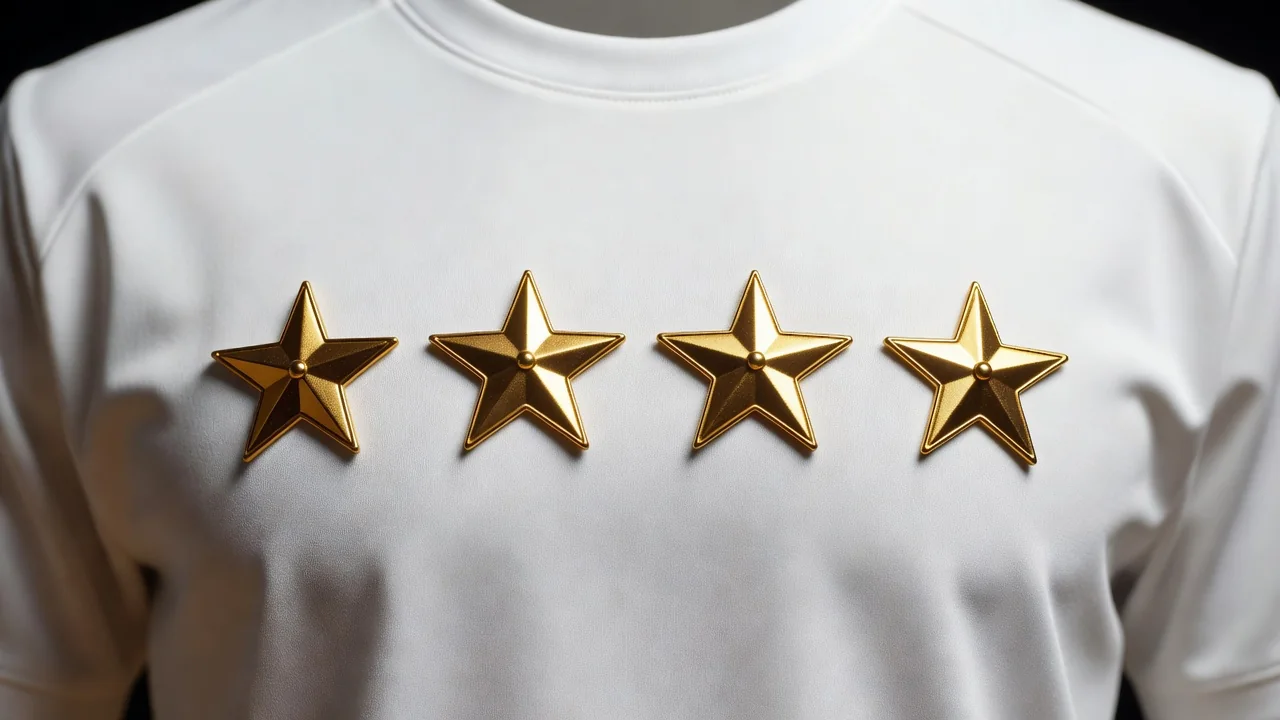
Four stars sit above the crest of the United States women's national team, one for each World Cup. No other nation has more than two. The story of how those stars were earned spans three decades, four generations of players and a programme that built women's football in America before most countries had noticed it existed.
The titles came in two waves. The pioneers of 1991 and 1999 created the sport's first great team and its first true mainstream moment. Fifteen years later, the sides of 2015 and 2019 proved the machine could regenerate, winning back-to-back in an era when the rest of the world had finally caught up.
1991 and 1999: the foundation
The first Women's World Cup, held in China in 1991, was won by a US team built around Michelle Akers, April Heinrichs and Carin Jennings. Akers scored ten goals in the tournament, including both in the 2-1 final win over Norway. Women's football barely existed as an organised global sport, and the Americans had already built its first dynasty.
1999 turned dynasty into phenomenon. The home World Cup filled NFL stadiums, and the final against China at the Rose Bowl drew 90,185, a record crowd for a women's match that stood for 23 years. Brandi Chastain's winning penalty and her shirt-waving celebration became one of the defining images of American sport, full stop.
The four triumphs, side by side
| Year | Host | Final | Defining figure |
|---|---|---|---|
| 1991 | China | USA 2-1 Norway | Michelle Akers, ten goals |
| 1999 | USA | USA 0-0 China (pens) | Chastain's penalty, Rose Bowl record |
| 2015 | Canada | USA 5-2 Japan | Lloyd's 13-minute hat-trick |
| 2019 | France | USA 2-0 Netherlands | Rapinoe, Morgan, relentless depth |
2015 and 2019: the regeneration
The 16-year drought between 1999 and 2015 tested the programme's identity. Germany won twice, Japan once, and the Americans kept arriving as favourites and leaving with silver. The breakthrough in Canada was emphatic: Carli Lloyd scored a hat-trick inside 16 minutes of the final against Japan, including one from the halfway line, in a 5-2 win that avenged the 2011 final defeat.
France 2019 was arguably the most complete campaign. The US beat hosts France in a fevered quarter-final, edged England in the semi, and controlled the final against the Netherlands 2-0. Megan Rapinoe took the Golden Ball and Golden Boot, and the squad used the tournament's platform to escalate their fight for equal pay, a battle that reshaped the sport's economics.
- 1991: the first champions of the first World Cup.
- 1999: the Rose Bowl record and a cultural landmark.
- 2015: the drought broken with a final for the ages.
- 2019: back-to-back titles and a fight bigger than football.

The ones that got away
The dynasty's near-misses shaped it as much as the titles. The 2007 semi-final, a 4-0 defeat to Brazil in China, forced a reckoning that produced the 2012 Olympic gold and the 2015 World Cup. The 2011 final, lost on penalties to Japan after twice leading, became the motivation that fuelled the 2015 rematch.
Then came 2023, the earliest exit in programme history at the round of 16. Each failure fed the next rebuild, which is why the four stars tell only half the story. The other half is a culture that treats every defeat as evidence rather than accident.
Why the pipeline kept producing
The structural answer is college soccer. Title IX legislation from 1972 required equal opportunity in federally funded education programmes, and it funnelled generations of American girls into organised sport with scholarships at the end. When other federations were starting from zero, the US already had a player pool numbering in the hundreds of thousands.
The world has since closed the gap, as the 2023 round-of-16 exit made painfully clear. Spain, England and the rising European club game now develop players at a technical level the college system was never designed to match. The fifth star, whenever it comes, will be earned in a far harder landscape than the first four. That is the honest measure of what those early teams built: a sport that grew strong enough to beat them.
The fifth star is now the programme’s explicit goal under Emma Hayes, with Brazil 2027 as the first target. History says the Americans respond to humiliation with titles. The 2023 exit was the humiliation. The response is being built right now.
The four stars also frame the programme’s unique pressure: anything less than a final feels like failure. No other nation carries that expectation. It is the price of being the team that taught the world how this tournament is won.
Four stars above a crest is a heavy thing to wear, and no team in the sport wears anything heavier. The next generation knows exactly what it is inheriting.
The standard, set in 1991 and renewed ever since, remains the standard. Four stars say so.
Keep reading

Emma Hayes and the USWNT Rebuild, Explained
From Chelsea's trophy room to Olympic gold in Paris within months. How Emma Hayes reset the USWNT and what her long-term project looks like.
2026-08-19
World Cup 2027 in Brazil: Everything We Know
The first Women's World Cup in South America: dates, host cities, the expanded 32-team field and why Brazil 2027 matters beyond the football.
2026-08-12
Spain 2023: How a First World Cup Was Won
Olga Carmona's goal beat England in Sydney and made Spain world champions at the first attempt. The run, the style and the aftermath.
2026-08-05