
91,553 at Camp Nou: The Night Records Fell
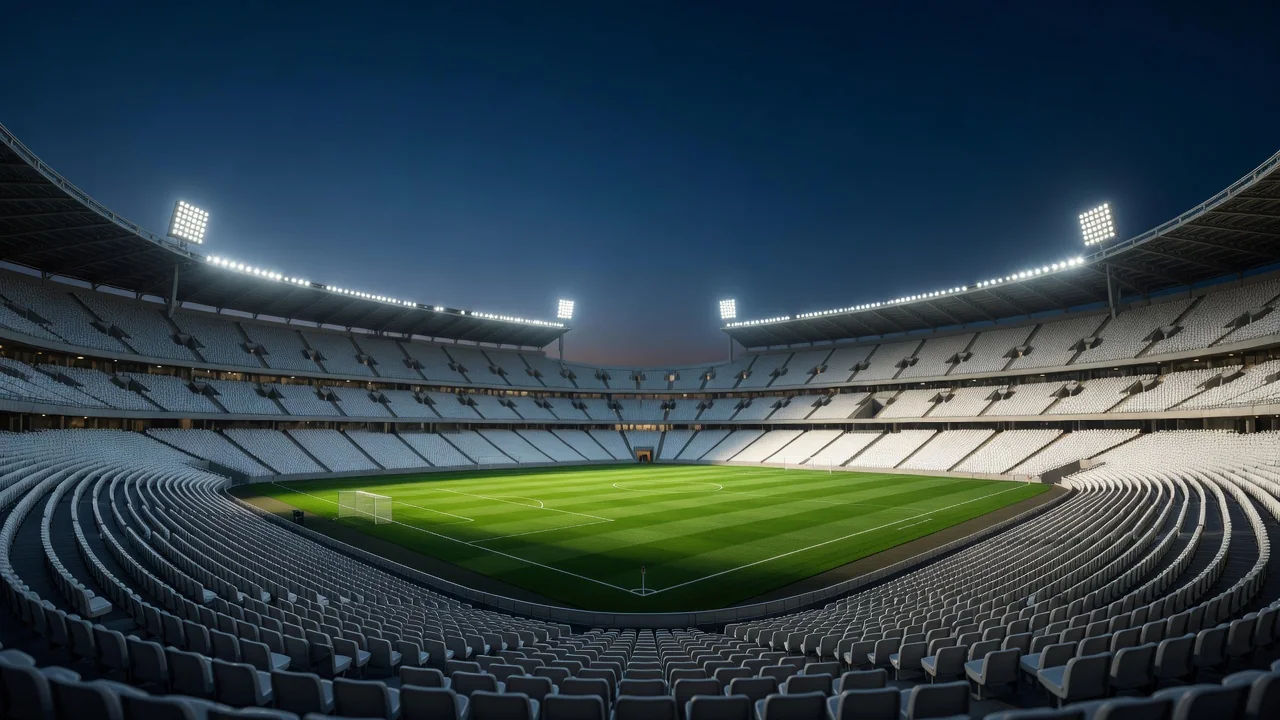
On 22 April 2022, the turnstiles at Camp Nou stopped counting at 91,553. Barcelona's Champions League semi-final against Wolfsburg did not just break the attendance record for a women's football match; it shattered the assumption that such a number was decades away. One evening in Catalonia recalibrated the ambitions of an entire sport.
The figure topped the previous verified mark of 90,185, set at the 1999 World Cup final at the Rose Bowl, a record that had stood for nearly 23 years. It was not a one-off curiosity either. A month earlier, 91,648 had watched Barcelona beat Real Madrid in the quarter-final at the same ground. The semi-final simply did it again, in front of the whole of Europe.
How a stadium sold out twice
None of it was spontaneous. Barcelona's board had committed to staging the women's biggest matches at Camp Nou rather than the 6,000-capacity Estadi Johan Cruyff, and the club marketed the fixtures like men's clásicos. Tickets were priced accessibly, members were mobilised, and the team gave the project its engine: a side playing some of the best football on the planet.
The opponent mattered too. Wolfsburg were former champions and a genuine heavyweight, so the semi-final carried real jeopardy rather than exhibition energy. The crowd got its full spectacle: Barcelona won 5-1, with the stadium registering its pleasure at a volume the women's game had never produced before.
The record in context
| Attendance | Match | Venue, year |
|---|---|---|
| 91,648 | Barcelona vs Real Madrid, UWCL quarter-final | Camp Nou, 2022 |
| 91,553 | Barcelona vs Wolfsburg, UWCL semi-final | Camp Nou, 2022 |
| 90,185 | USA vs China, World Cup final | Rose Bowl, 1999 |
| 87,192 | England vs Germany, Euro final | Wembley, 2022 |
One historical footnote deserves its place in the story. An estimated 110,000 watched Mexico play Denmark at the unofficial 1971 Women's World Cup in Mexico City's Azteca, but that tournament sat outside FIFA's recognition and the figure was never officially ratified. The Camp Nou mark is the verified record, and the club treated it accordingly.
Why the number mattered
- Proof of demand: the matches were sold, not given away, at scale.
- Sponsorship leverage: brands could see a prime-time product with a giant live audience.
- A template for rivals: clubs across Europe began planning main-stadium fixtures.
- Psychological shift: the ceiling on the sport's imagination moved permanently.

The match the crowd watched
The football matched the setting. Barcelona won 5-1, playing with a fluency that made the occasion feel like a coronation. Caroline Graham Hansen tormented the right flank, Aitana Bonmatí controlled the middle, and the goals came in waves that kept the stadium on its feet for ninety minutes.
Before kick-off, the crowd raised a mosaic reading "Més que un club", the club's motto in Catalan. Players spoke afterward of struggling to hear each other in the warm-up. For many in attendance, including thousands of children seeing women's football live for the first time, the evening was a conversion experience that no marketing campaign could replicate.
The echo since that night
The months and years that followed showed the record was a beginning rather than a peak. England drew 87,192 to Wembley for the Euro 2022 final that summer. Arsenal turned the Emirates into a weekly five-figure venue. San Siro hosted over 55,000 for a women's derby, and Mexico's Liga MX Femenil posted its own record gates.
What Camp Nou proved is that the constraint was never appetite; it was ambition in staging and selling. Put a winning team in a great stadium, price it for families and promote it like it matters, and the people come. The record will fall again someday, probably in Barcelona or London. When it does, the first thing the new mark will be compared to is a spring night in 2022 when 91,553 people made the sport's oldest excuse obsolete.
Barcelona’s women have since moved their biggest nights to the renovated Camp Nou’s temporary homes, and the crowds have followed. The record night was not the destination. It was the moment the sport found out how big the destination could be.
The club marked the night with a commemorative shirt and a permanent place in its museum. Players from that team still describe the noise as unlike anything else in their careers. Records are numbers on a page until you stand in the middle of one.
The number itself has taken on a life beyond the match. It appears in sponsorship decks, federation strategy papers and school projects, shorthand for the moment the sport’s scale changed. Every crowd record broken since stands in its shadow. The night did not just set a record; it set an expectation.
Someday soon, another stadium will host a bigger night. The sport will celebrate it properly, because it knows how.
Keep reading

New UWCL Format: The 18-Team League Phase Guide
Eighteen clubs, one league table, six matches each and no more groups of four. The 2025-26 overhaul of the Women's Champions League, decoded.
2026-08-28
Lyon's Eight European Titles: Anatomy of a Dynasty
Eight Champions League titles, including five in a row. How Olympique Lyonnais built the first great superclub of the women's game.
2026-08-21
How Barcelona Became the Team to Beat in Europe
Four finals in five years, back-to-back titles in 2023 and 2024, and a style exported straight from La Masia. The making of a European superpower.
2026-08-14